

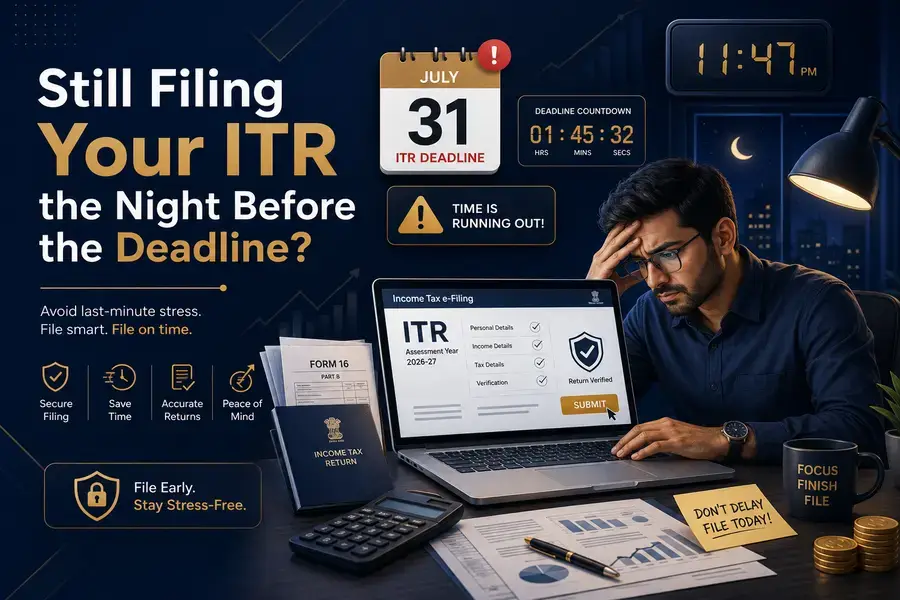
There's a very specific kind of panic that sets in around the last week of July in Delhi — WhatsApp groups suddenly light up with people asking “bhai Form 16 kahan se milega,” CA offices near CP and Nehru Place get flooded with walk-ins, and somehow the income tax portal always seems to slow down at exactly the wrong moment. Every single year, the same story repeats itself, even though nothing about the process is actually new.
It doesn't have to be like this. Whether you're a government employee near ITO, work at a private firm in Connaught Place, or run a small business out of Karol Bagh, filing your return is a lot less painful once you know what you're actually dealing with. This isn't going to be one of those dry, form-heavy explainers — just a straightforward walkthrough of what matters.
First things first — which form do you even need?
Most salaried people in Delhi end up using ITR 1, also known as Sahaj. It's meant for individuals whose income is fairly simple: a salary or pension, maybe one house property, and some interest income on the side. Your total income also needs to stay under Rs. 50 lakh for this form to apply.
The moment things get slightly more complicated — you sold some shares, you own a second property, you're a freelancer or consultant with business income — you'll need a different form. A lot of people in Delhi, especially those juggling a day job with some freelance work on weekends, end up needing ITR 3 or ITR 4 without realizing it, and that mismatch is where a good chunk of filing errors come from.
Why “TDS is already deducted” isn't the full story
This comes up constantly. Someone assumes that because their employer already cut TDS every month, there's nothing left to do. Except TDS is really just an estimate — it's based on the declarations you submitted at the start of the year, and life rarely goes exactly according to plan. Maybe you bought health insurance mid-year, or made an investment in December you hadn't planned for in April. Filing your return is what actually reconciles all of that.
If you end up having paid more tax than you owed, filing is the only route to get that money back. And there's a practical side to this too — banks, embassies, and landlords across Delhi routinely ask for ITR copies going back a couple of years, whether it's for a home loan, a visa, or even renting an apartment in some of the more particular housing societies.
Documents worth gathering before you sit down
Save yourself the mid-filing scramble by keeping these ready:
- Form 16 from your employer (from every employer, if you switched jobs)
- Bank interest certificates
- PAN and Aadhaar
- Investment proofs for 80C, 80D, and similar deductions
- Rent receipts, if you're claiming HRA
- Home loan interest certificate, where applicable
- Details of any advance tax you've already paid
Walking through the actual filing
Once your documents are sorted, the process itself moves fairly quickly:
- Log into the income tax e-filing portal using your PAN.
- Select the correct assessment year and pick the applicable ITR form.
- Go through the pre-filled information carefully — salary, TDS, and interest figures are usually auto-populated, but they aren't always accurate, so cross-check against your Form 16.
- Add your deductions and exemptions.
- Review your final tax computation — refund or payable.
- Submit, and don't forget to e-verify.
That last step is where a surprising number of people trip up. They submit the return, feel relieved, and forget that without e-verification, none of it actually counts. Aadhaar OTP is usually the quickest way to close that loop.
The mistakes that show up year after year
A handful of errors keep repeating across salaried filers in Delhi: numbers that don't line up with Form 26AS or the AIS, savings account interest quietly left unreported, picking a tax regime out of habit instead of actually comparing the two, and — as mentioned — skipping e-verification entirely. None of these are complicated fixes. They're just the kind of thing that slips through when you're filing in a rush.
Old regime, new regime, and why it actually matters
This decision genuinely changes your final tax number, so it's worth more than thirty seconds of thought. The old regime lets you claim deductions on investments, HRA, home loan interest, and insurance premiums, but the slab rates are higher. The new regime drops most of those deductions in exchange for lower rates across the board. If you invest fairly seriously each year, the old regime often still comes out ahead. If you don't, the new one can genuinely save you money. Running both calculations before deciding takes a few extra minutes and is worth every bit of that time.
When it makes sense to bring in help
If your income is one salary with nothing unusual going on, filing yourself is perfectly manageable. But Delhi's job market has a lot of movement — people switching companies mid-year, freelancing on the side, dealing with rental income from a family property. In situations like that, getting professional support for Income Tax Return filing in Delhi isn't about being unable to handle a form. It's about avoiding the kind of small errors that turn into a notice six months down the line, at a point when you've completely forgotten the details of that year's filing.
Bringing it together
Filing your return doesn't need to be the deadline-week fire drill it usually becomes. Get your paperwork sorted early, know which form actually applies to you, and set aside a quiet half hour instead of doing it at 11 pm three days before the due date. And if you'd rather not wrestle with the portal at all, getting help with ITR Filing in Delhi from someone who does this regularly is a completely reasonable way to take the whole thing off your plate.
Frequently Asked Questions (FAQs)
Q1. Which ITR form applies to most salaried people in Delhi?
Most salaried individuals fall under ITR 1, provided their income is under Rs. 50 lakh and comes from salary, one house property, and basic interest income.
Q2. I do some freelance work on the side — can I still use ITR 1?
Usually not. Freelance or business income typically pushes you into ITR 3 or ITR 4, depending on how your income is structured.
Q3. What's the general deadline for filing ITR each year?
It's usually July 31 of the assessment year, though it's smart to check for any extension announced closer to the date.
Q4. Is it possible to file ITR without Form 16?
Yes, though it's harder without it. You can rely on your payslips and Form 26AS instead, but Form 16 makes the whole process considerably smoother.
Q5. What happens if I file my return late?
You can still file a belated return, but expect a late fee plus interest on any unpaid tax, and certain loss carry-forward benefits may no longer apply.
Q6. Why does e-verification matter so much?
Because without it, your return isn't legally considered filed — even if you've submitted every section correctly. It's a step people forget constantly.
Q7. Can I switch between the old and new tax regime each year?
If you're salaried with no business income, yes — you can choose whichever regime works better for you at the time of filing each year.
Q8. How should I report interest earned on my savings account?
It goes under “Income from Other Sources,” and you may be able to claim a deduction under Section 80TTA depending on the amount.
Q9. What if my Form 16 doesn't match Form 26AS?
Get it corrected with your employer before filing. A mismatch left unresolved is a common trigger for tax department notices.
Q10. Can I claim HRA exemption while filing my return?
Yes, as long as HRA is part of your salary structure and you have valid rent receipts to support the claim.
Q11. Do I really need professional help for a simple salaried return?
Not always. But if you've switched jobs, have freelance income, or rental income from a property, getting support for Income Tax Return filing in Delhi tends to prevent avoidable mistakes.
Q12. What should I keep safe after filing my return?
Your ITR-V acknowledgment, Form 16, and proof of all deductions claimed — ideally for at least six years.
Q13. Are NRIs eligible to use ITR 1?
No, ITR 1 is meant strictly for resident individuals. NRIs need to use a different applicable form.
Q14. Will I automatically get a refund if I've overpaid tax?
Yes, once your return is processed, any excess tax paid is refunded directly to your registered bank account.
Q15. Who should I turn to for reliable ITR Filing in Delhi?
Someone with actual experience handling returns similar to yours — whether that's a salaried professional, a freelancer, or someone with rental income — tends to be far more useful than a one-size-fits-all filing app.
Ready to File Your ITR without the Last-Minute Stress?
Don't wait until the ITR deadline is around the corner. Get your Income Tax Return filed accurately and on time with help from experienced tax professionals.
Whether you're a salaried employee, freelancer, consultant, or have income from multiple sources, The Filing Zone can help you choose the right ITR form, review your documents, calculate your tax liability, and complete the filing process. Call us at +918178508772 for Income Tax Return filing in Delhi or send your query today!